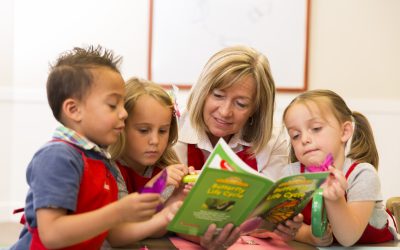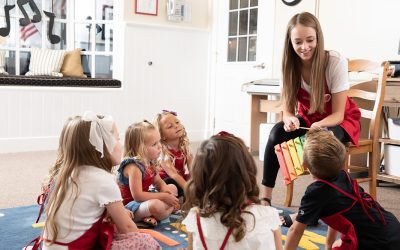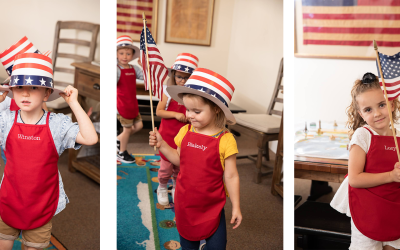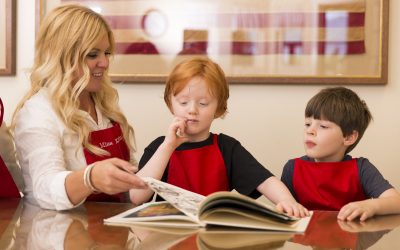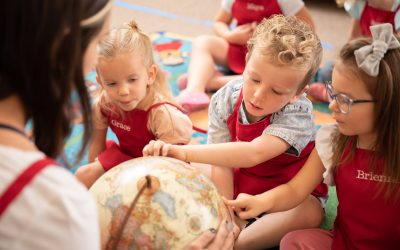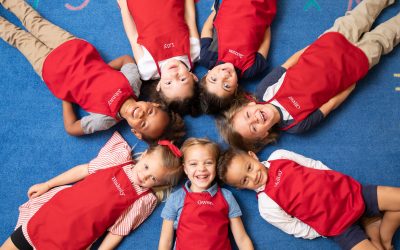
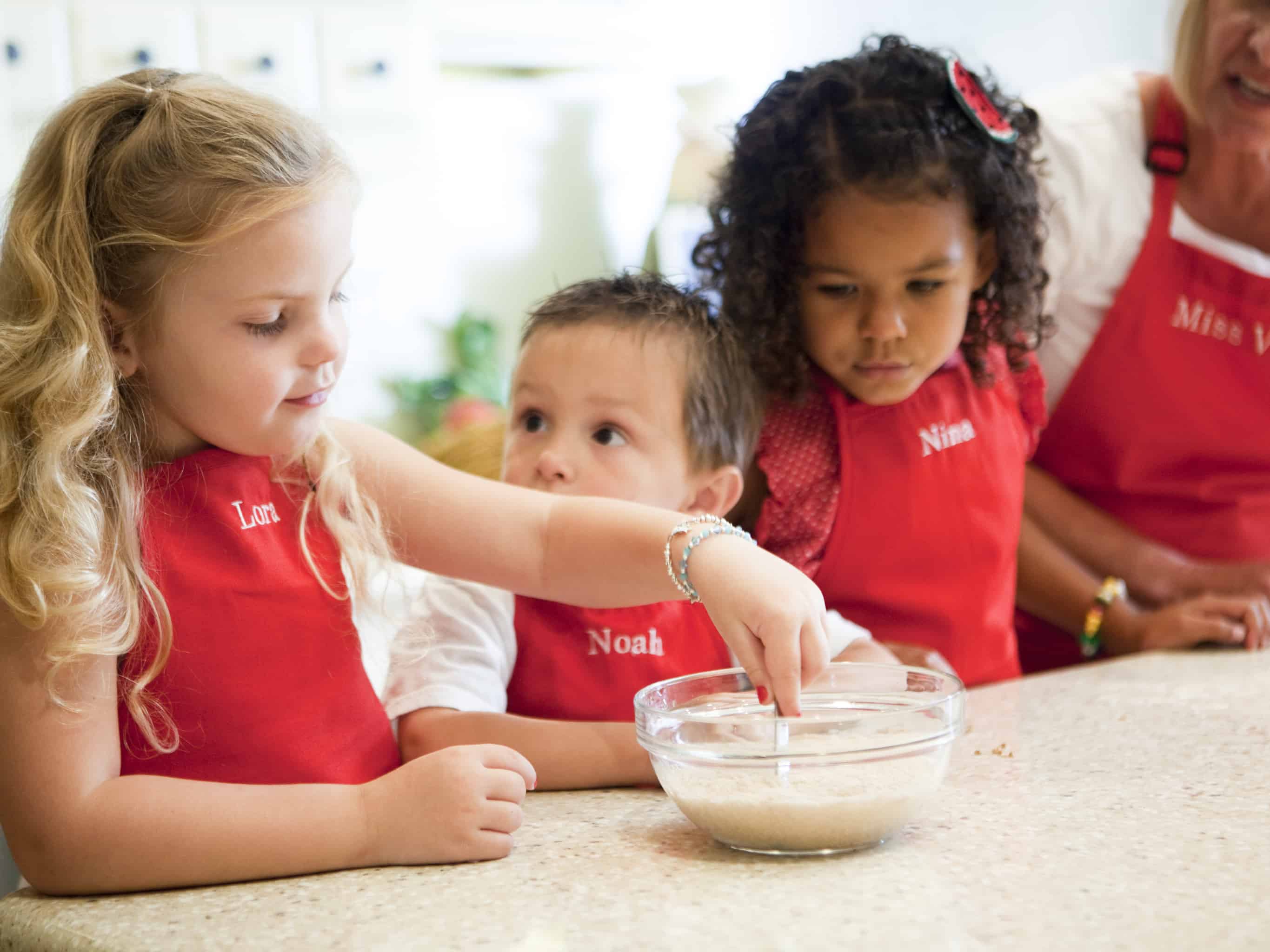
You’ve probably noticed at Kids Village that every red apron and every red book bag has a student or teacher’s name embroidered on it.
This isn’t (only) because we want each student or teacher to know which apron is theirs; it has to do with the science behind why knowing each others names are important.
“A person’s name is, to him or her, the sweetest and most important sound in any language.” – Dale Carnegie.
Why is Learning Names Important for Children?
Psychologists, sociologists, and organizational experts have studied the impact of calling others by their names, and the results are notable. Not only does calling someone by their name connect you better with that person, it also increases accountability, trust, empathy, and positive communication.
1. It helps your child feel like a welcome part of the community
Children are used to being led by adults. However, instead of students being only followers in our school, we want them to feel like they are a part of it. We believe this mindset helps them develop confidence, creativity, and establishes accountability. Learning and using names is an important way we convey this sense of community. It shows that each child within the Village matters and is a part of our community as a whole.
“A person’s name is the greatest connection to their own identity and individuality. Some might say it is the most important word in the world to that person…It is a sign of courtesy…When someone remembers our name after meeting us, we feel respected and more important,” says organizational psychologist .
2. It establishes a successful social atmosphere
“Knowing who others are, and others knowing who we are, is the primary building block of social life,” says sociologist Karen Sternheimer.
Learning names is an important step in developing friendships. It establishes and strengthens a category in the mind in which memories, including those involving a particular person (or friend), can be stored.
It also makes it less daunting to strike up a conversation. While some children may confidently ask others’ names or let another child know if they don’t remember their name, some children are more shy and will choose to be silent rather than risking saying the wrong name. Having names proudly displayed on aprons means the ice is already broken and that children can use a child’s name to get his or her attention. This makes it possible for children to better connect with each other.
3. It helps students to become more accountable.
“…when we are known and not anonymous, we are more likely to behave in ways that reflect positively on our identities.” – Karen Sternheimer.
When teachers know students names, students are more likely to behave since they know they are being seen. Children inherently seek approval from others as they explore different behaviors. But they may also be used to slipping under the radar. While we don’t want our students to feel like they’re under surveillance, we do want them to feel as though they are active and important members of our school community, and that we see each student as his or her own person.
4. It increases positive behavior
Making sure we are using our students’ names when we speak with them or give direction means the child knows we are speaking directly to them, not just spouting off typical grown up commands.
We’ve probably all experienced the feeling of being “tuned out” by a child. Using a name in conjunction with communication helps the child know that what we’re saying includes and involves them. It helps them feel more connected to us as individuals, helps them feel seen, and usually makes them more likely to respond positively to whatever is being communicated.
This level of connection and accountability gives our students an opportunity to learn to make positive choices. It helps them make choices based on how it reflects upon them instead of choosing to obey or not obey simply based on their interest level.
5. It increases empathy
When children learn each others’ names, you’re opening the door for them to learn a little more about each others’ lives. “When we do this, we are also helping them practice empathy, value difference, and understand the importance of being friendly to all, even if they’re not going to be best friends with everyone,” says Caltha Crowe, author of How to Bulleyproof your Classroom.
“Knowing and using each others’ names in a respectful way builds trust and positive communication establishing a supportive group environment.” -Jennifer Stanchfield.
The important step of learning other children’s names takes students from sharing their ideas or thoughts aloud, to sharing them with someone outside the home. They begin to realize that when they’re speaking, they’re building a relationship with a distinct person. This is an important step in development because it helps a child link what they’re saying to the impact on other people, which increase empathy toward others.
6. It increases the opportunity for communication between student and teacher
Wayne Stocks, a writer and researcher for childhood communication says, “In a child’s eyes…if you can’t remember their name, you aren’t a ‘friend;’ you are just another adult that they have to answer to. They might listen to you, they might even respect you, but they will not open up to you, and will lose your opportunity to speak into their lives.”
Our teachers take the time to learn each of their students names, but having names accessible and used from day one means students feel they are in a safe environment where they are seen and where they matter. This means they are much more likely to have more open, positive lines of communication with the Kids Village teachers.